Merino Mill Was Never Supposed to Be Mooresville's Saturday Morning
October 1, 2026
October 1, 2026
Michal Bay didn't buy the old Mooresville Cotton Mills complex on South Main Street because he wanted to open a pizzeria. He bought it because a real estate deal landed in front of him with no time to think it over, and because the man doing the selling told him honestly that the buildings were a mess. Bay's original plan for the 1.1 million square feet of brick and timber was to build the region's biggest furniture market. That plan is why, if you ask longtime residents what Merino Mill was "supposed to be," the answer has nothing to do with what's actually there on a Saturday morning now.
The furniture market never took off. What did take off was a pizza place nobody else wanted to run.
When Bay first started filling the mill's rehabbed sections after his 2010 purchase, more inventory seemed like the obvious move. He kept adding furniture. Sales didn't follow the square footage. By his own account, that phase taught him more about what the building actually wanted to become than any business plan could have.
The turn came when Bay tried to hand off a food concept to eleven friends, offering any of them the chance to open a pizzeria or a burger spot inside the mill. All eleven passed. So Bay went to Italy, learned to make pizza himself, bought specialty ovens, and opened Alino Pizzeria. Within two months he had leased out large sections of previously empty space near it. That's the part of the story that explains everything downstream: the mill's identity as a food and gathering destination wasn't zoned into existence or delivered by a single master developer. It happened because a furniture market failed and a Turkish immigrant taught himself to make Margherita pizza with mozzarella he now has shipped in weekly from Italy.
That sequence matters if you've ever wondered why Merino Mill doesn't feel like a shopping center. Nothing about its current mix of restaurants, an antique mall, a coffee roastery, and a rotating cast of small manufacturers was planned together as one property. It was assembled tenant by tenant, mostly through word of mouth from people already working there.
The restaurant lineup at the mill now includes Alino Pizzeria, Barcelona Burger & Beer Garden, Picasso Mediterranean and its sister concept Picasso Taqueria, and the newest addition, Florence Wine & Beer Garden. Together, they give visitors several distinct ways to eat and drink at the mill.
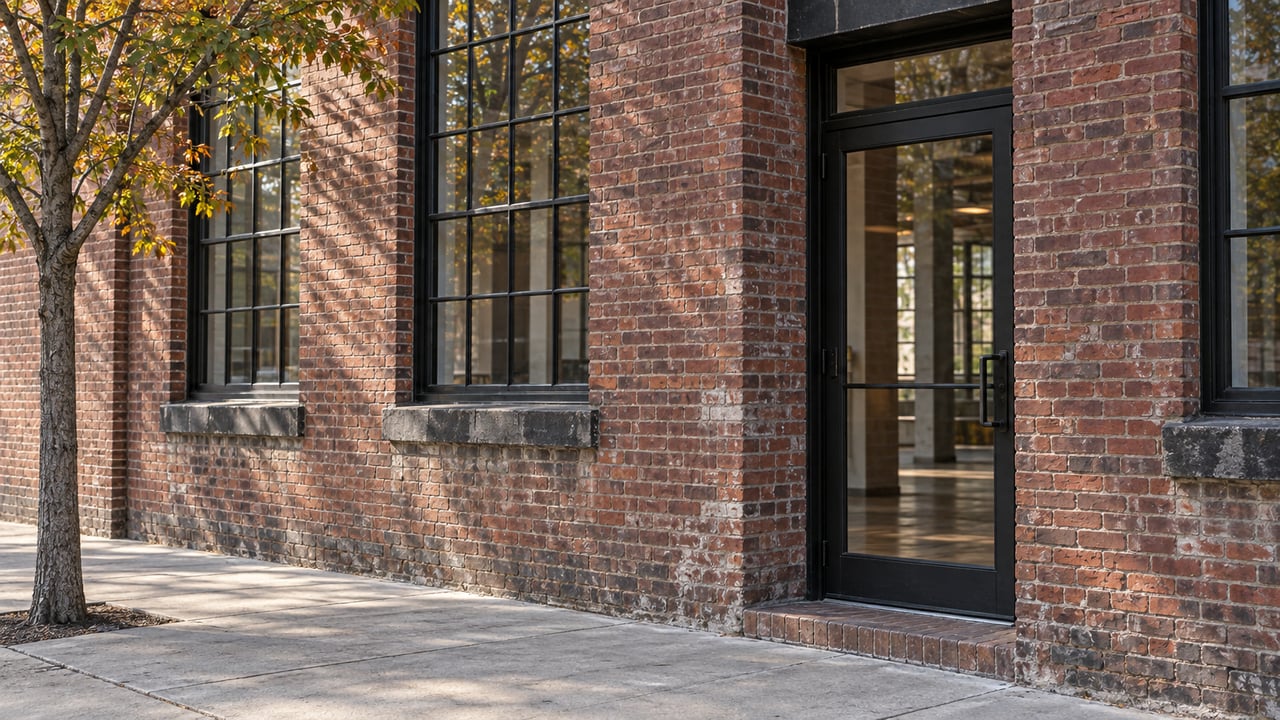
Florence is the one drawing new attention this year. It occupies the mill's century-old Powerhouse building on South Church Street, the structure that once generated steam and electricity for the Mooresville Cotton Mills. Bay spent close to three years renovating it, keeping the original 50-foot ceilings, the arched windows, and the weathered brick rather than tearing the building down and starting over. He's said as much directly: the space had character but was run down, and knocking it down in favor of something bigger would have erased a piece of American heritage the town deserved to keep.
Florence opened for its soft opening in early October 2025 with a grand opening on October 7, which puts the restaurant on the edge of its first full year in business this fall. The menu stays intentionally short, about a dozen items across appetizers, pasta, and meat courses, with desserts leaning into classic Italian: cannoli, tiramisu, limoncello mascarpone cake, and a hot honey peach cheesecake that shows up more than once in local write-ups. The dining room looks out over a pond through the same archways that once framed mill machinery.
If you've only been to Merino Mill once, you've probably only seen one version of it. The property actually runs on three separate schedules that rarely get mentioned together:
Layer those three schedules over each other and you get a property that looks completely different depending on which morning you show up. A Tuesday coffee run has nothing in common with a fourth-Saturday car show, and neither resembles a quiet Sunday market browse. That's unusual for a single address, and it's a direct result of the mill growing tenant by tenant rather than opening all at once with a unified calendar.
The antique side of the property adds a fourth layer that runs on its own clock entirely. Main St. Antiques & Design Center, housed inside the mill, has grown into the largest antique mall in the Carolinas, drawing steady traffic from well beyond Mooresville. Bay has mentioned meeting visitors who drove in from Virginia and Ohio just for the antique mall, a detail that says something about how far the property's reputation now travels relative to its start as a failed furniture warehouse.
Part of what makes a Saturday morning at Merino Mill feel unlike a typical retail center is what's happening upstairs while the car show runs below. The mill houses working offices for DEHN USA and Greenworks Tools, both global manufacturers with staff on site during the week. A German supply chain manager showed up at one of the mill's ribbon-cutting events specifically to speak about what the location has meant for his company's Charlotte-area operations. Most people snapping photos of vintage trucks in the parking lot on a Saturday morning have no reason to know that a European power-systems company runs part of its U.S. business two floors above them.
That mix, working corporate tenants sharing a roof with a flea market and a wine bar, isn't something a developer sets out to build from scratch. It's what happens when a property gets filled in over the years by whoever needed the space next, rather than delivered complete by a single planning document.
The mill's next visible shift sits just outside its own walls. The Town of Mooresville has pointed to the Moor Park renovation, on the southern end of Main Street near the mill, as the next piece of infrastructure meant to keep the area's momentum going. Town leadership has framed the mill's own transformation as proof of what South Main Street redevelopment can do, using language about economic vitality and diverse business growth when discussing what comes next for that stretch of the corridor.
None of that changes what already exists at Merino Mill this fall. The car show calendar runs through December. The market keeps its Friday-to-Sunday rhythm. Florence keeps serving tiramisu under fifty-foot ceilings that used to house steam boilers. And somewhere above the parking lot where classic cars line up on Saturday mornings, a German engineering firm keeps its lights on through the week, in a building that was never supposed to end up this way.
If you're weighing what a neighborhood like Mooresville actually offers day to day, not just on a spec sheet, Erin Ficenec spends her weeks in these towns and is glad to talk through what makes a specific street or property feel right for how you actually live.
Whether you're looking to find your dream home or want to sell your property with success, Erin's commitment to excellence ensures a smooth and satisfying experience. Let's connect today!