What Actually Happens at Rescue Squad Park on a Saturday in Denver, NC
September 17, 2026
September 17, 2026
By eight in the morning, the gravel lot off Galway Lane is already half full. A woman is unloading folding tables from a hatchback for the farmers market. Two guys with disc golf bags sling them over their shoulders and head toward the tree line. Somebody's golden retriever is losing its mind at the fence of the dog park before the gate is even open. None of these people are here for the same reason, and that is exactly the point.
If you live in Denver, you already know Rescue Squad Park. What you might not have clocked is how much of the town's actual social life runs through that one plot of county land instead of through a downtown district. Denver never built a Main Street the way Mooresville or Davidson did. What it built instead, largely through one civic club, was a single park that does the job of about five separate places in a town with a traditional core.
The Denver/Lake Norman Rotary Club was formed in 1995 as a spin-off from the Rotary of Lincolnton, and it's affiliated with Rotary District 7670. In towns with an old downtown grid, that kind of civic energy tends to go into storefront preservation or a Main Street association. In Denver, it went into building a park. The Denver/Lake Norman Rotary helped construct Rescue Squad Park, which the county now operates, and named it in recognition of the East Lincoln Rescue Squad and the residents of eastern Lincoln County who supported the squad over the years.
That naming detail matters more than it looks. It means the park's origin story isn't a developer's amenity package or a parks-department line item. It's a volunteer service club and a rescue squad, and the layout reflects that. Instead of one flagship feature, the park is a stack: ball fields, a playground, a disc golf course, walking trails, fitness stations, a dog park, and a picnic pavilion, all built out over time and all still under Rotary's programming hand for at least part of the calendar.
The disc golf course at Rescue Squad is the part of the park that draws people from well outside Denver. It's a nine-hole layout, but reviewers on disc golf enthusiast sites consistently single it out for elevation changes that are unusual for a course this compact, with tee shots that reward angle control over raw power. One frequently cited par 4 gets specific praise for being more interesting than comparable holes at other regional courses, and the Lincoln Charter area terrain the course sits on gives it more vertical variety than most nine-hole layouts in the region get to work with.
The practical wrinkle for local players is that nine holes isn't always enough for an afternoon. Beatty's Ford Park sits about a mile away, and it's common for players to run both courses back to back to get a full eighteen. That pairing, one park built by a civic club and one built separately nearby, is a small but telling sign of how Denver's recreation infrastructure grew: not as a single master-planned complex, but as a patchwork that residents have learned to stitch together themselves.
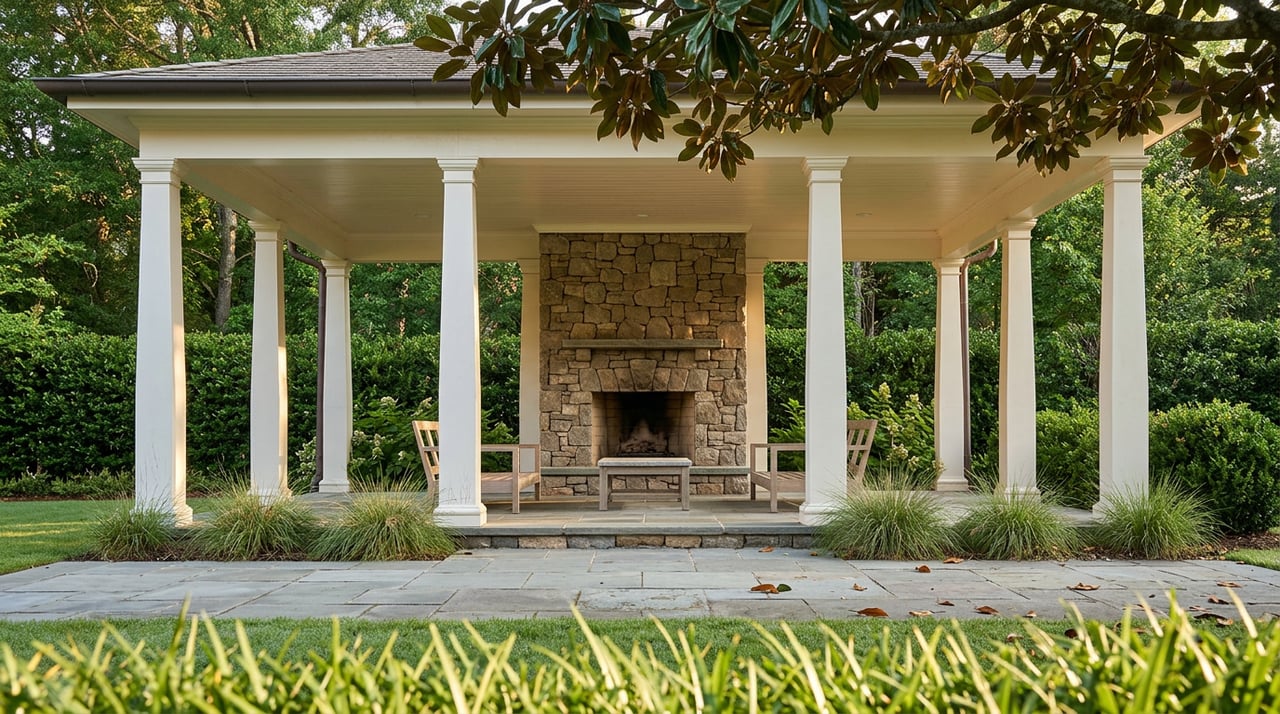
Rescue Squad Park is also home to the Denver Farmer's Market, which runs Saturdays from 8 a.m. to noon. It's the same footprint that hosts the disc golf course and the ball fields, which means on a Saturday morning you can walk from a produce table to a tee pad without leaving the parking lot.
The dog park sits toward the back of the property, fully fenced with separate space for big and small dogs, a water fountain, and free parking right nearby. It's not a manicured amenity. Visitors note the ground is mostly dirt and mud rather than grass, especially after rain, which is the kind of unglamorous detail that never makes it into a brochure but is exactly what a regular knows before they go. Around the whole property runs a half-mile walking trail, short enough to loop before or after whatever else brought you there that day.
Here's what that concentration actually replaces, if you think about what a town with a traditional downtown would spread across separate addresses:
| What a downtown grid usually provides | What Rescue Squad Park provides instead |
|---|---|
| A market square or plaza | The Saturday farmers market, 8 a.m. to noon |
| A civic green for concerts | The Rotary's Music in the Park series, held on Saturdays through the summer |
| A dedicated dog run | The fenced dog park at the back of the property |
| A sports club or rec center | Two multi-purpose athletic fields and fitness stations |
| A specialty recreation venue | The nine-hole disc golf course |
None of that is a complaint about Denver lacking a downtown. It's a description of how the town solved the same problem a different way, by concentrating instead of spreading out.
Once the market packs up and the disc golf bags go back in the trunk, Denver's dinner options are spread along NC-16 rather than clustered on a single block, but there's more range than a quick pass through town suggests. Steak and seafood regulars gravitate to 16 Prime Steak & Seafood or Lineberger's Cattle Company Steakhouse & Saloon, the latter leaning into a rustic, hand-cut-steak identity. Citrus the Diner covers breakfast through dinner with a casual, familiar menu. For something faster and more casual, Little Mountain Burger Co. and My Brother's Bagel handle the smash-burger and morning-bagel end of things, while Latitudes Bar & Grill and Margarita's Mexican Kitchen & Bar cover the rest of a casual night out.
Family-run Italian has its own small cluster here too. Marchello's Neighborhood Italian and Zeko's Village Italian Restaurant & Pizzeria both lean into the homemade, family-owned identity rather than a chain feel, and Joey's Restaurant rounds out the Italian-and-pizza options with an American-classics menu alongside it.
Retail follows the same scattered-but-present pattern as the restaurants. Strawberry Fields Denver and Amy's Closet cover women's clothing and consignment fashion, Red Barn Marketplace does home décor and Polywood furniture, and Albertine Florals Wine & Gifts pairs custom floral work with local art and wine. None of it is arranged into a walkable strip. You drive between them, which is its own kind of honest description of what Denver actually is day to day.
One more data point worth sitting with. In May 2026, the Lake Norman Chamber of Commerce held its Small Business Week reception and named MBA Roofing as Denver's Small Business of the Year, alongside honorees from Cornelius, Davidson, Huntersville, and Mooresville. The ceremony itself was held at the Lake Norman Visitors Center, a shared regional venue rather than anything in Denver proper.
That's a small but consistent pattern with everything else here. Denver's actual weekly rhythm, the market, the disc golf, the dog park loop, happens hyper-locally at one park off Galway Lane. But when it's time for a formal civic moment, like recognizing a Denver business, that happens somewhere shared with the rest of the lake region. The town's daily life is concentrated. Its ceremonial life is regional. Both are true at once, and neither one is a downtown in the way Mooresville or Davidson would recognize the word.
Denver's Saturday doesn't happen because the town built a Main Street and filled it with shops. It happens because a Rotary club and Lincoln County stacked a market, a dog park, a disc golf course, and a walking trail onto one piece of land, and everyone in town learned to route their weekend through it. That's not a lesser version of a downtown. It's a different answer to the same question, and if you've spent a Saturday morning walking from the market tables to the tee pads, you already know it works.
If you're already living this rhythm and ever find yourself curious about what's happening across the rest of the lake, or thinking ahead to a move within it, Erin Ficenec knows Denver and the wider Lake Norman area well enough to talk through it honestly. Let's Connect.
Whether you're looking to find your dream home or want to sell your property with success, Erin's commitment to excellence ensures a smooth and satisfying experience. Let's connect today!